The Syrian Refugee Crisis In 21 Devastating Photos
As a result of the Syrian civil war and the accompanying war against ISIS, approximately 4.8 million people in the surrounding area are now refugees, according to the United Nations.
These people have lost their homes, then fled on foot or on small rafts across the sea, all in the hopes of building a stable life for themselves and their families in Europe and beyond. And with people flooding into other nations, the Syrian refugee crisis has tested the resolve — and tolerance — of many nations around the world.
Here is what that crisis looks like:
At its peak, 14,000 mainly Syrian and Iraqi refugees camped out in Idomeni, but in May 2016, Greek police shut down the camp, hoping to send refugees to "official camps."
DIMITAR DILKOFF/AFP/Getty ImagesIn 2014, Turkey became home to 700,000 Syrian refugees. In 2016, that number reached more than 2 million.
BULENT KILIC/AFP/Getty ImagesMOAS has saved 2,000 people in 2016 so far, and a total of 15,000 people since they began working in 2014.
ANGELOS TZORTZINIS/AFP/Getty ImagesA month earlier, the EU reached a deal with Turkey stipulating that if refugees arriving in Greece do not apply for asylum in Europe or if their claim is rejected, they will be sent back to Turkey, where their journey began.
,br>As a result, many refugees are stranded in Turkey, hoping to settle there permanently. With limited healthcare and education, and without stable housing, many are forced to squat on empty land or unused buildings, living in tents or makeshift structures and under the constant threat of being relocated to one of the 25 official camps elsewhere in the country.
Although many have been given restricted work permits allowing them to work various jobs, the long hours and minimal pay only provide enough money for basic necessities. Most cannot afford rent.
Chris McGrath/Getty ImagesThe BBC reports that since Europe closed its borders to migrants, 60,000 people have become stranded in the already financially strained Greece, waiting to find out if they will be granted asylum in Europe.
JOE KLAMAR/AFP/Getty ImagesHeavy fighting between Islamic State militants and Kurdish fighters has taken place there over the past several years.
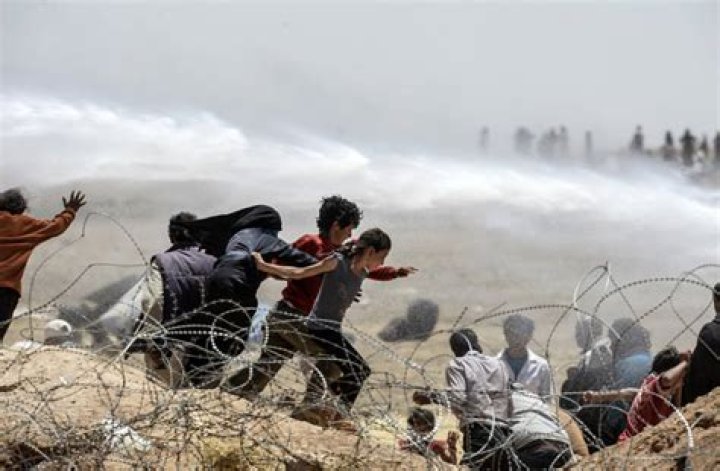
ARIS MESSINIS/AFP/Getty ImagesMigrants protesting the border closings continue to clash with police in Greece. Police have used tear gas, rubber bullets, and grenades to drive people away from the border crossing.
ANGELOS TZORTZINIS/AFP/Getty ImagesIn 2015, the Guardian reported that Germany, the top refugee destination, took in nearly 1 million asylum seekers.
Sean Gallup/Getty ImagesTurkey's continued conflict with Kurdish militia has so far displaced 200,000 people, while thousands more Kurds flee ISIS.
BULENT KILIC/AFP/Getty ImagesDozens of rafts are still making the journey daily as thousands flee conflict in Iraq, Syria, and Afghanistan. UNHCR reports that in 2015, 1 million refugees reached Europe by sea, and 4,000 more drowned trying to make the journey. Half of them were Syrians fleeing war and persecution.
Spencer Platt/Getty ImagesThey had no access to food and aid until the United Nations Relief and Works Agency (UNRWA) was able to gain entry. Nevertheless, some civilians still remain stranded in the camp without proper medical care, food, or water.
United Nation Relief and Works Agency via Getty ImagesIn just five months, Jordan opened its borders to 20,000 refugees, but after the border crossing was designated a military zone in June 2016, the Jordanian government barred UN aid workers from providing food, water, and medical care to the those living in refugee camps.
KHALIL MAZRAAWI/AFP/Getty Images